If you train hard four or five days a week, you already know the feeling. It is not injury pain. It is that dense, waterlogged heaviness in your calves and quads that shows up the morning after leg day or a long run and makes stairs feel like a personal insult. I dealt with that for years before I started using a pair of QUINEAR air compression boots after my sessions, and the difference in how my legs feel the next morning is not subtle.
I am 44, I lift four days a week and run twice, and until last year my recovery routine was basically ibuprofen and hoping for the best. I tried foam rolling, I tried stretching more, I tried an ice bath in my bathtub exactly twice before deciding that was not for me. Compression boots were the first thing that actually made a measurable difference I could feel two mornings in a row, not just once and then back to normal soreness.
This guide walks through exactly how I use them, step by step, so you are not guessing at pressure settings or timing the way I did the first few weeks. None of this is complicated. It just needs to be done consistently, the same way icing or stretching only works if you actually make it a habit instead of a once-a-month emergency measure. Five steps, twenty to thirty minutes, and a little bit of patience while your body adjusts to something new.
Stop letting sore legs decide what tomorrow's workout looks like
The QUINEAR compression system takes the guesswork out of leg recovery with adjustable pressure zones built for exactly this kind of soreness.
Amazon Check Today's Price on Amazon →Step 1: Time it right, ideally within 2 hours of finishing your workout or run
Compression works best when it is helping usher out the metabolic waste and fluid buildup that happens right after hard effort, not two days later once you are already stiff. I aim to get into my boots within an hour of finishing a lift or a run, usually right after I shower and eat something. If I wait until bedtime, it still helps, but I notice a bigger difference in next-day soreness when I do it early.
If you cannot do it same-day, do not skip it entirely. Using the boots the next morning on legs that are already sore is still worthwhile. It just is not quite as effective as catching the inflammation early, before the fluid has had all night to settle into your lower legs and ankles.
One thing that trips people up here: you do not need to be freshly showered or in workout clothes. I have used mine in sweatpants right off the couch. The boots go over clothing fine, though thinner fabric like leggings or compression tights lets you feel the pressure zones more precisely, and it also keeps sweat off the inside lining, which matters if you plan on using them daily.
I keep mine in a spot near the couch specifically so there is no friction between finishing a workout and actually using them. The first month I stored the boots in a closet upstairs, and I can tell you from experience that if the walk to grab them takes more than thirty seconds, some nights you just will not bother. Convenience matters more than people give it credit for.
Step 2: Sit somewhere you will actually stay for 20 to 30 minutes
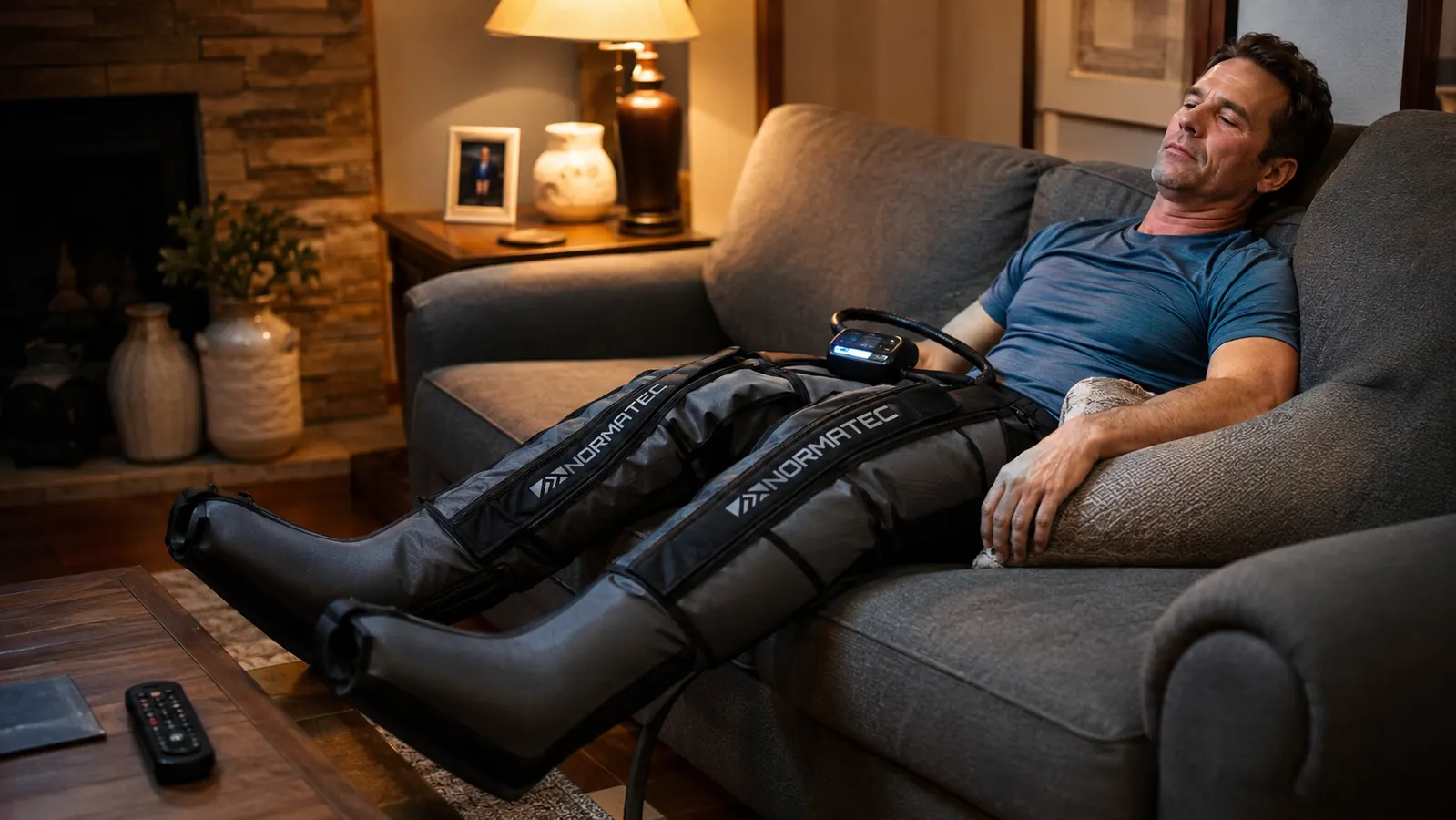
This sounds obvious, but it is the step most people get wrong when they first try compression boots. You are not going anywhere for the full cycle, so set yourself up before you zip in. I use my recliner with my phone, a water bottle, and the remote control for the boots all within reach. Some guys I know set up in front of the TV for a show they are catching up on. My wife does hers while reading.
Pick a spot with your legs elevated slightly if possible, even just propped on an ottoman. It is not required, but it seems to help the fluid move in the direction you want it to go, up and out of the lower leg, rather than just pooling back down at the ankle the second the cycle ends.
I will be honest, the first few times I tried to multitask through a session, answering work emails on my laptop, and I found the pressure waves distracting enough that I kept losing my train of thought. Now I treat it like a mandatory twenty minutes of doing basically nothing productive, and it has become one of the more relaxing parts of my evening instead of a chore I am trying to squeeze in around everything else.
My youngest has actually started asking to sit next to me during boot sessions because it is quiet time where I am not looking at my phone every ten seconds. That was not the point when I bought these, but it has turned into a small side benefit I did not expect.
Step 3: Zip in from the ankle up and check for even, snug contact
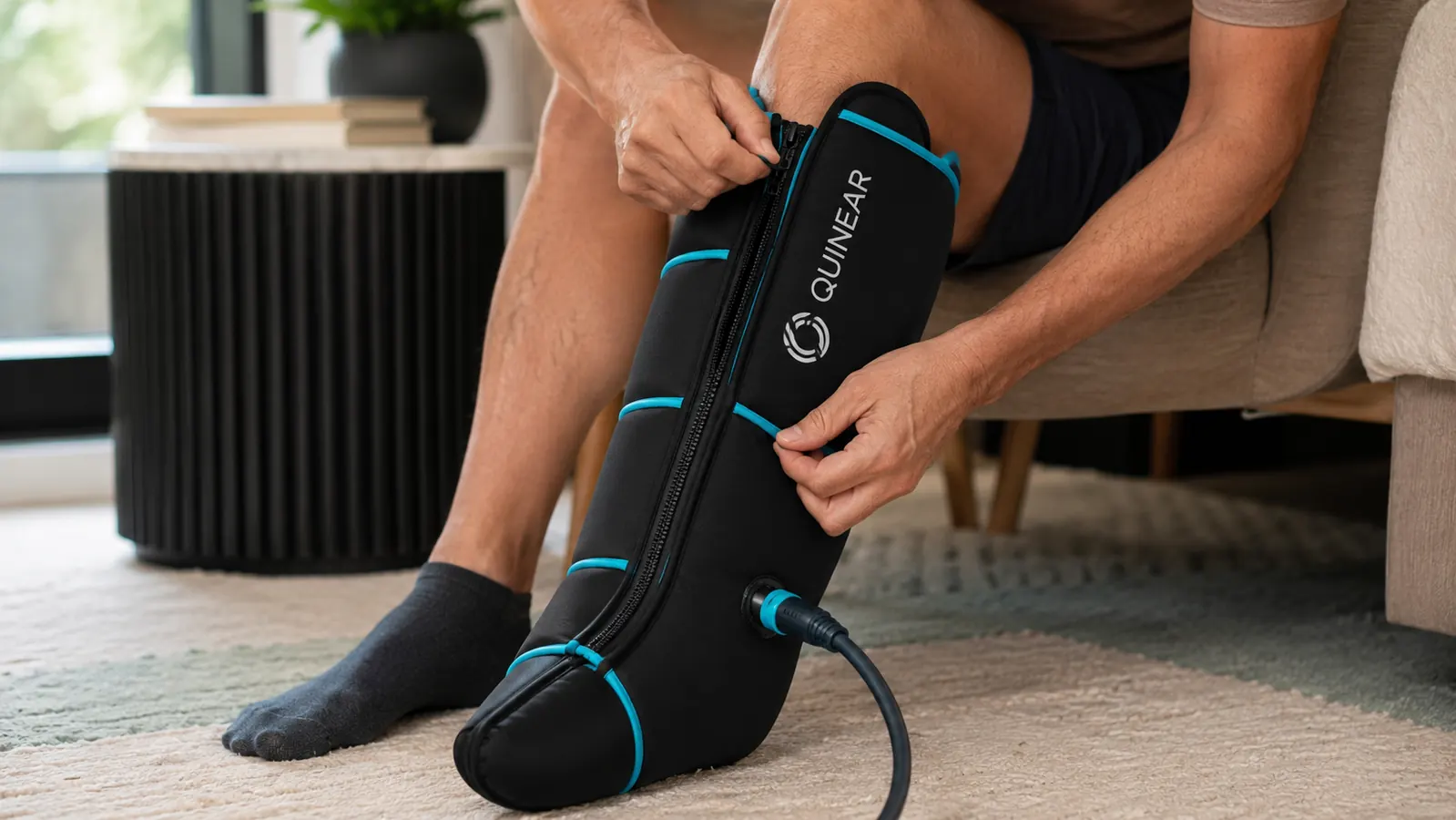
Slide your leg into the boot, then zip from the ankle toward the thigh. You want the boot snug against your skin or clothing with no loose bunching, especially around the calf and behind the knee where a lot of the segmented chambers sit. Too loose and you lose the wave-like squeeze that makes sequential compression different from a basic sleeve. Too tight before you even turn it on and you will be uncomfortable once the chambers start inflating.
The QUINEAR boots have five separate chambers per leg, which is what lets them do that sequential squeeze, ankle first, then calf, then up toward the thigh, instead of just clamping down all at once like a basic wrap. Getting the zip snug and even is what lets that sequence actually do its job instead of just squeezing wherever there happens to be slack in the fabric.
I made the mistake early on of zipping the left boot noticeably looser than the right, and I could tell within the first cycle. The left leg felt like a light hug, the right leg felt like an actual sequential squeeze doing real work. Now I run my hand down each boot after zipping to check for even tension before I ever turn the pump on.
It takes about ninety seconds to get both legs zipped in properly once you know what you are checking for. The first week it took me closer to five minutes because I kept second-guessing whether the fit was right. Trust your hands here, snug and even is easy to feel once you know what to look for.
Step 4: Start on a lower pressure setting and dial it up over your first few sessions
The controller lets you choose pressure levels, and it is tempting to crank it to the highest setting your first time because you assume more pressure means more recovery. It does not work that way, and cranking it too high on day one usually just means you take the boots off five minutes in because your legs feel like they are in a blood pressure cuff that will not quit.
I started around level 2 out of the available range for my first week, moved to level 3 after that felt comfortable, and now sit around level 4 most sessions, occasionally going higher after a genuinely brutal leg day. Let your body tell you where the right setting is. Snug and rhythmic is the goal. Painful or numb means back it down.
If you have any circulation issues, varicose veins, a history of blood clots, or you are pregnant, talk to your doctor before using compression boots at all. This is a recovery tool for otherwise healthy legs dealing with normal training soreness, not a substitute for medical guidance if something more serious is going on.
My training partner runs his boots two levels higher than I do, and he swears by it, but he has been using compression gear for years longer than I have. There is no prize for maxing out the pressure setting fastest. Building up over two or three weeks gets you to a level that actually feels good instead of one you are white-knuckling through.
Step 5: Run a full 20 to 30 minute cycle, then stand up slowly
Most sessions on my unit land around 20 to 30 minutes depending on the mode I pick. I usually let it run the full cycle rather than cutting it short, since the sequential squeeze-and-release pattern needs a few full passes to actually move fluid rather than just applying static pressure for a few minutes.
When the cycle ends, unzip and stand up slowly. Your legs will feel noticeably lighter, sometimes almost like you just got out of a pool. That is normal. I have had a couple of sessions where I stood up too fast and felt briefly lightheaded, nothing serious, but give it ten or fifteen seconds before you walk anywhere.
The first week, I ran a session every single day just to build the habit. Now that it is dialed in, I mostly use it three to four times a week, always after my heaviest leg sessions and my longer runs, and skip it on lighter recovery days when my legs do not need the help as much.
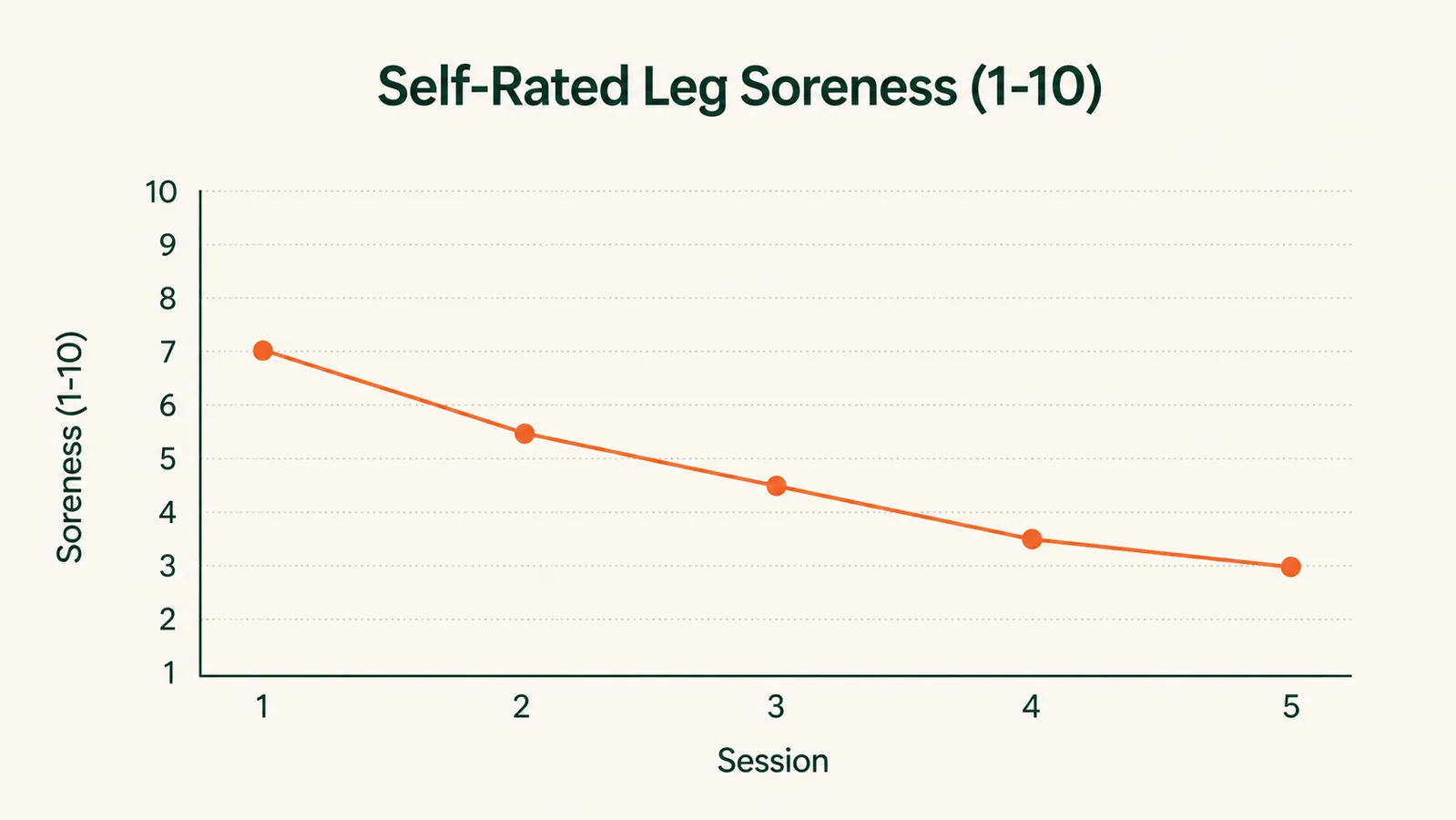
By the second week I started noticing the difference the next morning instead of just right after a session. My legs used to feel like bricks getting out of bed the day after leg day. Now that heaviness is still there sometimes, just noticeably softer and gone by the time I have had breakfast instead of lingering into the early afternoon.
I do not use these because they feel amazing while they are running. I use them because of how my legs feel the next morning when I skip a rest day.
What Else Helps
Compression boots are not a replacement for water, sleep, or basic mobility work, they stack on top of those things. On the nights I use the boots and also drink enough water and get to bed at a reasonable hour, my legs feel close to normal by morning even after a heavy squat day. Skip the water and stay up late scrolling, and the boots alone will not fully cover for it.
Pairing a 20 minute compression session with 5 minutes of static stretching for your calves and quads beforehand seems to help the fluid move even more efficiently, at least based on how consistently better my legs feel on those days versus the days I skip stretching. I have also started doing a slow 5 minute walk right after the boots come off, just around the block, which sounds counterintuitive after sitting still for half an hour, but it seems to keep the lighter feeling going instead of my legs settling right back into stiffness by the time I sit down for dinner.
A lot of guys my age also throw in a foam roller or a massage gun on the days between compression sessions, and I do the same thing. It is not either-or. The boots handle the fluid and circulation side of recovery, the roller handles the tight, knotted spots that compression alone will not fully release. Using both together on a rotating basis has been more effective than leaning on any single tool.
None of this needs to be complicated or expensive. A pair of compression boots, a consistent 20 to 30 minute window a few times a week, and paying attention to water and sleep gets you most of the way there. The boots just make the biggest single difference of anything I have tried, because they are the one recovery tool that actually forces me to sit down and do nothing for half an hour, which honestly might be half the benefit right there.
Give your legs the same recovery tool serious runners and lifters already use
The QUINEAR compression system is built for exactly this routine, ankle-to-thigh sequential pressure you can run in 20 to 30 minutes, right from your couch.
Amazon Check Today's Price on Amazon →