
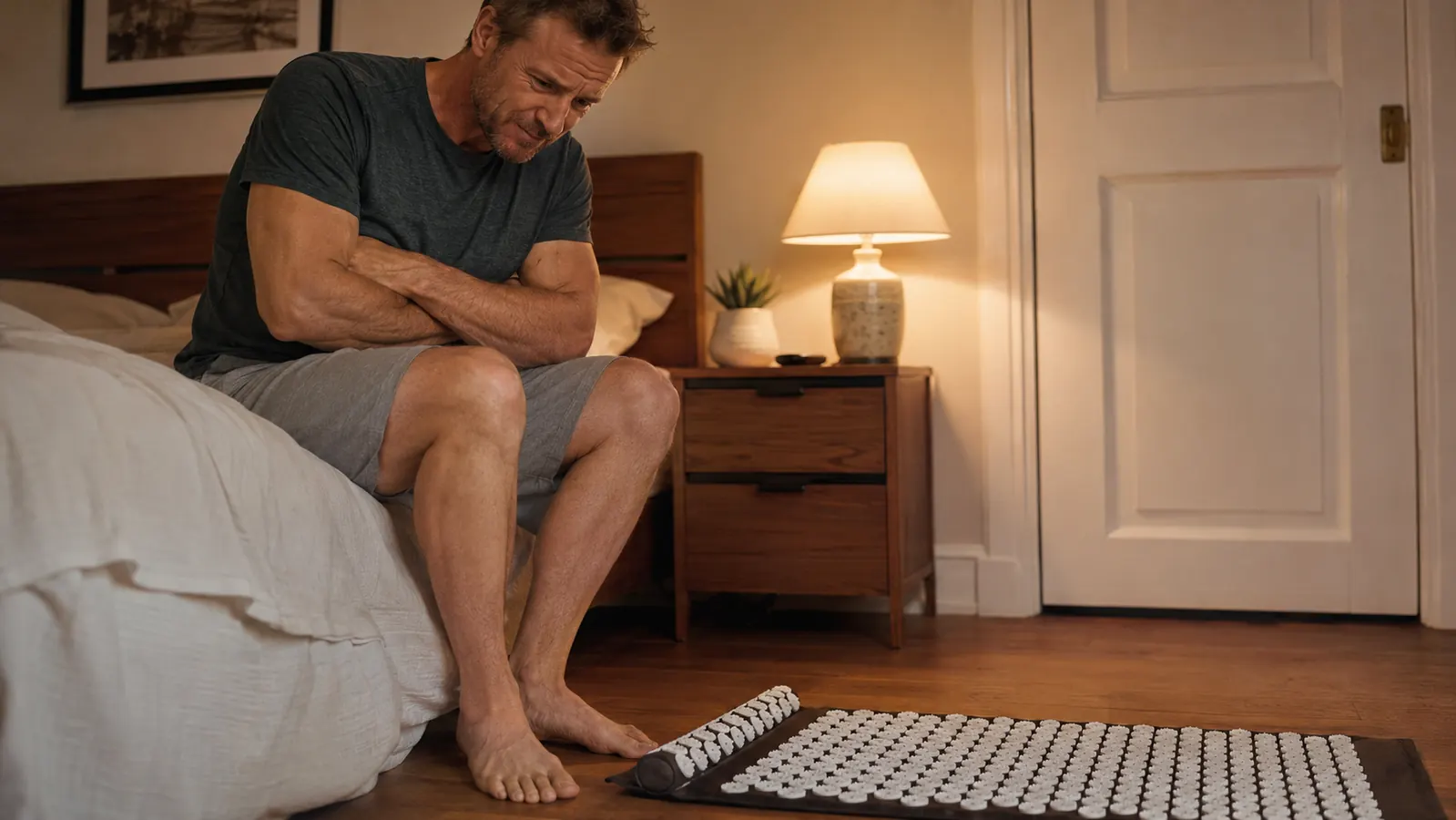
I almost gave my HemingWeigh acupressure mat away twice. Not because it didn't work, but because I kept hitting the stuff nobody puts in the five-star reviews: whether the sharp, poking pain in week one is actually supposed to feel that way, whether a couple of plastic spikes popping loose after a few months means the thing is falling apart or is just normal wear, and whether any of this is doing real muscle work or if I'm just lying still for twenty minutes and calling that recovery. I'm Rodney, I'm 44, I lift and run most weeks, and I've owned this mat long enough now to answer those questions honestly instead of repeating the marketing copy back to you.
This isn't going to be the review that tells you a budget mat covered in plastic spikes fixed my back overnight, because that's not what happened and I don't trust reviews that claim it did. What I can tell you is where this thing genuinely earns its price, where it's overhyped, and the specific stuff that made me second-guess the purchase in the first month, stuff I had to figure out through trial and error because nobody warned me ahead of time.
The Quick Verdict
A legitimately useful, low-cost tension tool once you get past the rough first sessions, but the early pain, occasional spike shedding, and murky science on deep muscle work are real caveats most reviews skip.
Amazon Check Today's Price →Before you lie down on 6,000 plastic spikes, here's what I wish someone had told me.
This isn't a hype review. It's the stuff that actually matters before you spend even modest money on a product that will genuinely hurt for the first week. Check today's price and read the honest breakdown below.
Amazon Check Today's Price on Amazon →How I've Actually Used It
I bought this mat after a physical therapist mentioned acupressure tools almost in passing, the kind of offhand recommendation that doesn't come with a usage manual. I unrolled it that same night, lay down bare-skinned like an idiot, and was back on my feet in under ninety seconds convinced I'd wasted twenty-seven dollars on a torture device. A lot of people have that exact same first experience and never make it to session two.
I use it three or four nights a week now, not every single night the way some reviews imply you should. Some weeks it's twice. During a stretch of travel a few months back it was zero for almost two weeks straight, and picking it back up after that gap hurt nearly as much as the first time, which is its own useful data point I'll get into below. I'm not tracking sessions in a spreadsheet or a habit app, this is a real, imperfect usage pattern, and I think it's more useful to you than the idealized every-night version most reviews describe.
The pillow gets used less, maybe once or twice a week, usually when my neck is locked up from a bad night's sleep. I'll be straight with you that I was slower to trust the pillow than the mat. The spikes are denser and the surface area is smaller, so the pressure concentrates fast, and my first two sessions with it under my neck left me wondering if I was doing something wrong rather than experiencing the product as intended.
Is It Actually Supposed to Hurt This Much?
Yes, and I wish someone had just said that plainly before I bought it. The first handful of sessions are not a gentle massage. They're a sharp, prickly, borderline alarming sensation that makes you question whether you're using the mat correctly or whether your skin is just more sensitive than everyone else's. I checked reviews mid-session looking for reassurance that I wasn't damaging myself, which is not a great sign for a product that's supposed to help you relax.
The honest answer is that it's supposed to feel intense, that's the whole mechanism, pressure across hundreds of points triggering a release response as your body adjusts. But nobody selling these mats tells you that adjustment period can take five to ten sessions, not one. A thin t-shirt barrier for the first several nights helps, and easing your body weight down slowly instead of dropping onto it matters more than it sounds like it should. Even with both adjustments, I'd be lying if I said the first week felt good. It felt tolerable, and tolerable is apparently the price of admission.
What surprised me is that the pain doesn't fully disappear even after you adapt, it just changes character. By week three it stopped feeling sharp and started feeling like deep, even pressure, closer to a firm massage than a bed of nails. But every time I've taken more than a week off, that adaptation resets partway and the next session stings again. That's not a flaw exactly, it's just something worth knowing before you buy: this isn't a one-time toughening-up, it's closer to a callus that fades if you stop using it.
The Spike Shedding Nobody Mentions
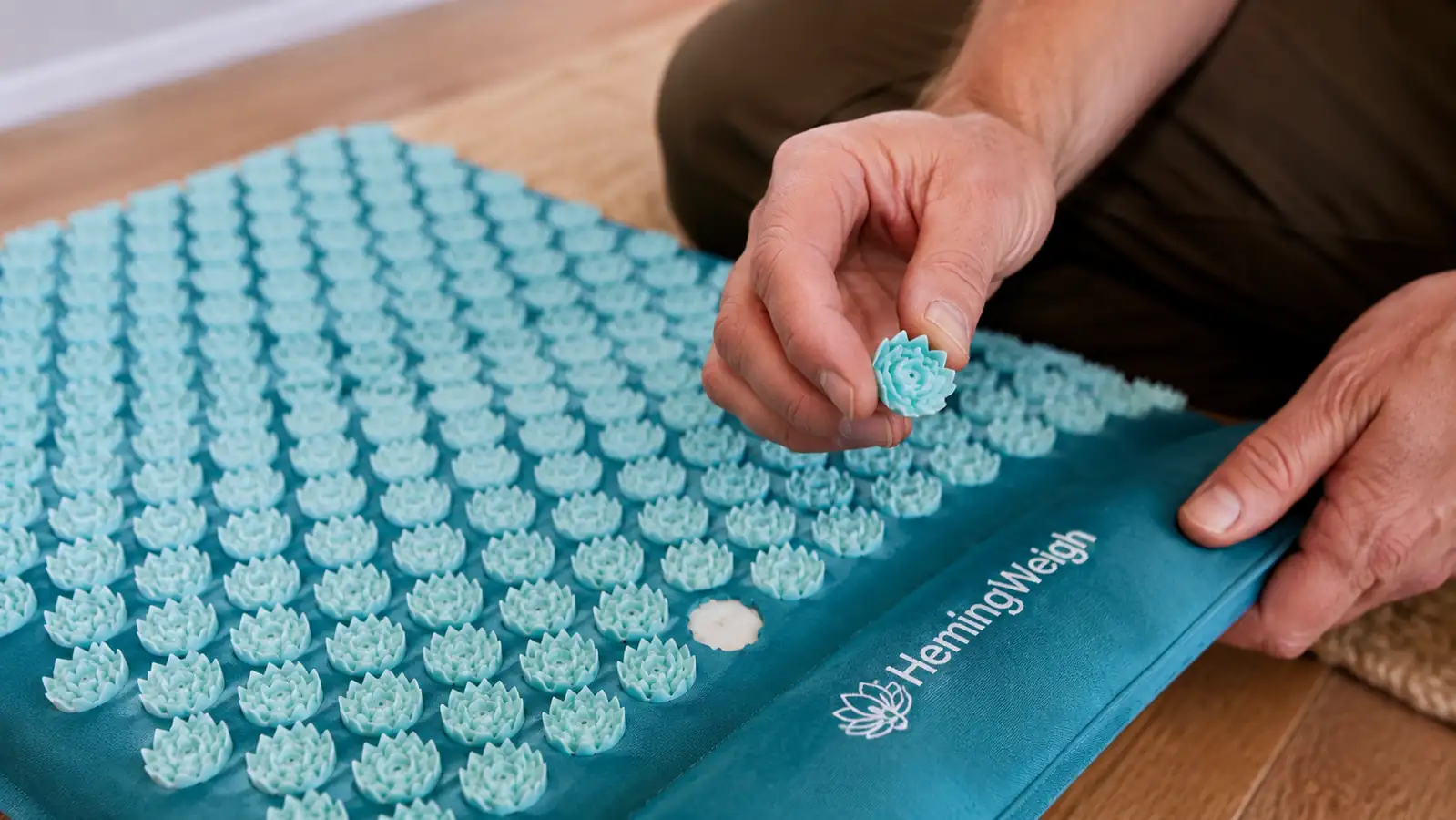
Around month four, I found a single plastic lotus-spike disc sitting on the rug next to the mat instead of attached to it. My first reaction was that the whole thing was falling apart and I'd wasted my money. After looking closer, one disc had popped loose from its stitching point, leaving a small bare patch of foam exposed. It hasn't happened again since, and the rest of the mat's several thousand spikes are all still firmly attached, but I think buyers deserve to know this is a real possibility, not a hypothetical one I'm raising to sound thorough.
To be fair, one disc out of thousands after roughly a hundred uses isn't a failure rate that should scare anyone off. But if you inspect gear closely, or you've got kids or pets who might find a loose plastic disc on the floor, it's worth a quick visual check every few weeks rather than assuming it's indestructible. I now run my hand over the surface before each use out of habit. I haven't had a second disc come loose since, but I'd be lying if I said it didn't make me trust the long-term durability a little less than I did in month one.
Is This Real Muscle Work or Just Relaxation?
This is the question I went back and forth on more than any other, and I don't think there's a clean answer. Acupressure mats are marketed with language that borders on medical, circulation, endorphin release, trigger point therapy, but a lot of what I feel during a session is closer to lying still and breathing slowly for twenty minutes than anything resembling deep tissue work. Some of that calm is almost certainly just the effect of stopping, not the spikes doing anything specific to my muscle fibers.
That said, I don't think it's pure placebo either, and here's why. On nights I use a firm foam roller instead of the mat, targeting a specific tight spot with real pressure and my body weight behind it, I get a noticeably different, more targeted release than I do from the mat's broad, even pressure across my whole back. The mat doesn't replicate that. What it does replicate, reasonably well, is the kind of full-body downshift you'd get from twenty minutes of a guided relaxation exercise, except with a physical sensation anchoring your attention instead of just your breath.
So my honest take, after being skeptical for months, is that this is doing two things at once and neither one is fake. There's a real, mild circulatory and skin-level response from the pressure points, and there's a real relaxation response from lying still and disengaging for twenty minutes. What it is not, in my experience, is a substitute for targeted deep tissue work on a specific knot or a genuinely tight muscle. If you're expecting this to feel like a sports massage, temper that expectation now. If you're expecting a low-effort way to downshift your nervous system before bed, that's closer to what you're actually getting.
Why People Quit After Three Uses
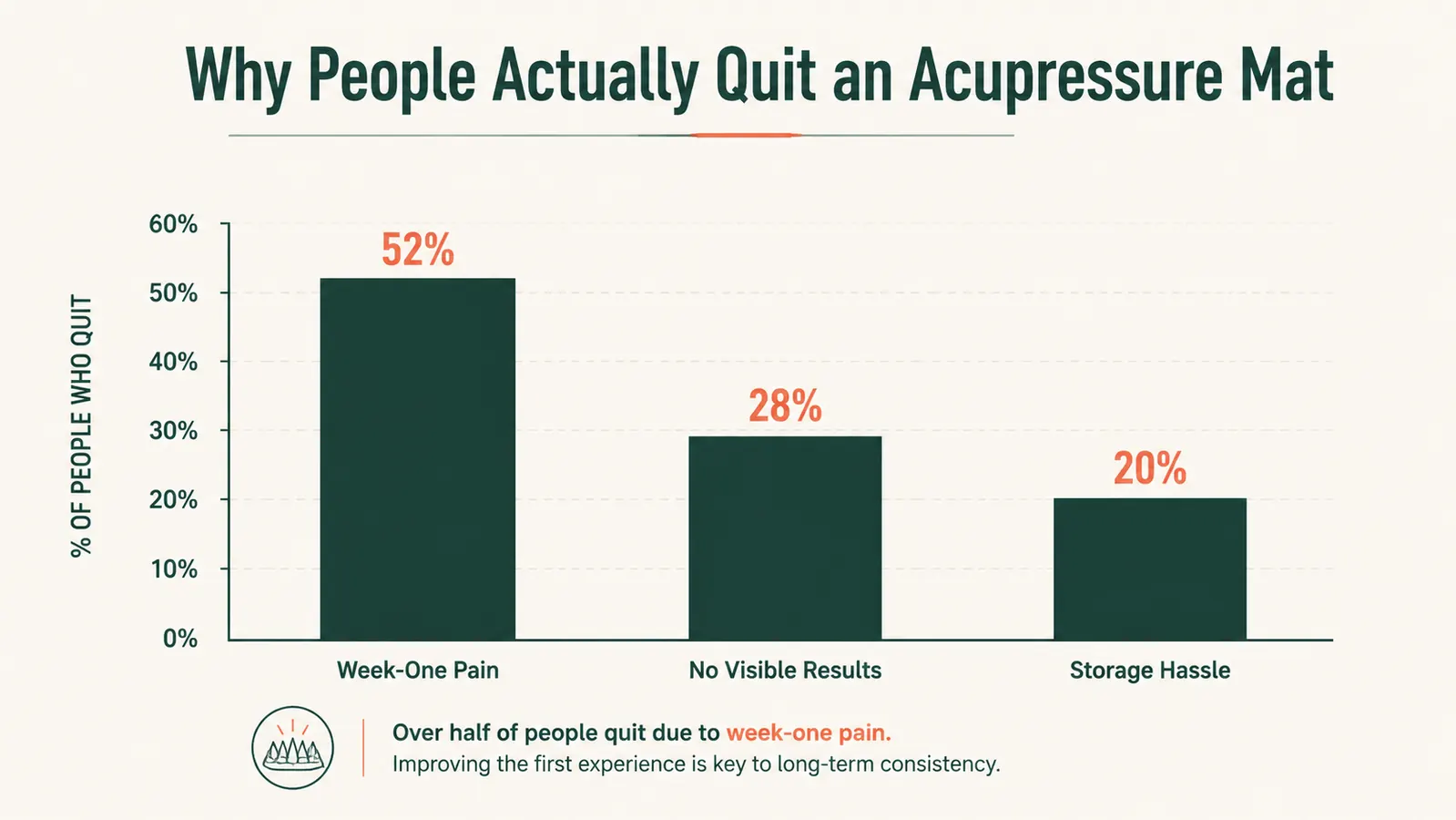
I told two people at my gym about this mat and both bought one. One is still using his regularly. The other quit after three sessions and it's sitting in his closet, and talking to him about why was more useful for this review than anything I could have guessed on my own. His reasons weren't unique to him, and I think they explain most of the quitters out there.
First, he never adjusted his approach after the first painful session, no t-shirt barrier, no easing down slowly, just three attempts at the same intensity that made session one miserable. Second, he expected a noticeable result immediately, and when his back didn't feel dramatically different after three uses, he wrote it off as not working. Third, he found unrolling and re-rolling the mat every night more friction than expected from a product marketed as low-effort. He lives in a studio apartment, and clearing daily floor space was enough of a hassle that the mat lost the habit war.
If any of those three things sound like they'd apply to you, that's worth sitting with honestly before you buy. This product rewards patience and a bit of a routine. If you're not going to give it past the first uncomfortable week, or if you don't have a dedicated few square feet of floor to leave it rolled out or easily accessible, you're a strong candidate to end up in the closet-quitter category too.
The Cover-Washing Hassle Nobody Mentions
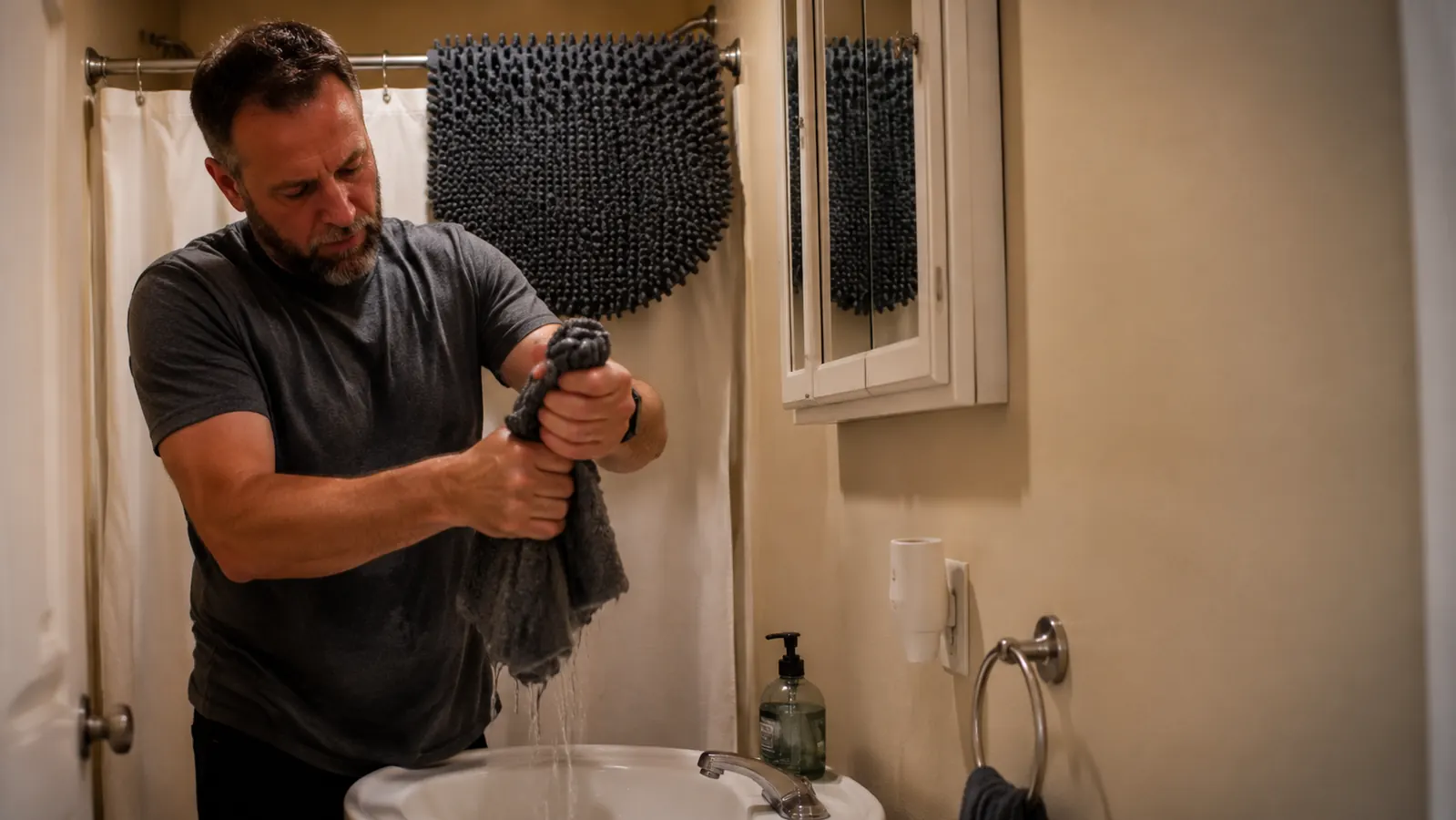
The fabric cover is removable and machine washable in theory, and technically that's true, but the actual process is more annoying than the product page implies. Getting the fabric back over hundreds of individual plastic spike discs without misaligning any of them takes real patience, closer to ten minutes than the thirty seconds you'd expect for stretching fabric over a mat. I've done it four times now and I still fumble at least one row of spikes catching on the fabric edge before I get it seated right.
I also learned not to put it in the dryer. The listing says air dry, and I ignored that once, and while nothing shrank catastrophically, the fabric came out slightly stiffer and took a few uses to soften back up. If you sweat through workouts before using it, or have pets that shed on it, budget for washing it every few weeks and plan on air drying it over a shower rod, not tossing it in with your regular laundry.
Where the Value Actually Holds Up
None of what I've written above means I regret buying it. At this price point, even with the rough first week, the occasional loose spike, and the cover-washing hassle, it's still one of the cheapest tools in my recovery rotation and one of the few I've stuck with consistently for months. Compare that to a massage gun or a pair of compression boots, both of which I also own, and this is the one that costs the least and asks the least of me on a given night. Unroll it, lie down, done.
I'd also say the honest version of this review, with all its caveats, makes me trust my own positive experience with it more, not less. If I'd read a flawless five-star account before buying, I would have quit in week one thinking something was wrong with the product or with me. Knowing going in that it's supposed to hurt at first, that a spike might eventually pop loose, and that it's doing more nervous-system downshifting than deep muscle repair, sets expectations that actually match what you get.
What I Liked
- Genuinely calming once you push past the first uncomfortable week, not pure placebo
- One of the cheapest tools in a recovery rotation by a wide margin
- Low effort to use once it becomes a habit, no charging or setup
- Comes with a matching pillow and storage bag included
- Held up well overall despite one minor spike coming loose after roughly a hundred uses
Where It Falls Short
- First week genuinely hurts, more than most reviews admit upfront
- A single plastic spike disc popped loose around month four on my unit
- Cover washing is more fiddly than the listing implies, and it's air-dry only
- Feels more like relaxation and mild circulation than real deep tissue work
- Easy to quit early if you skip the t-shirt-barrier break-in or don't have consistent floor space
Nobody tells you it's supposed to hurt at first, or that this is doing more nervous-system downshifting than actual deep muscle work. Knowing both of those things going in would have saved me from almost quitting twice.
Who's Actually Wasting Their Money on This
If you're buying this expecting it to replace a foam roller or a massage gun for a genuinely tight, specific muscle knot, you're going to be disappointed and I'd rather tell you that now than let a return window teach you the hard way. If you can't commit to at least five or six sessions before judging it, you're statistically likely to end up like my gym buddy, three uses in and done. And if you don't have a dedicated spot to leave it rolled out or quickly accessible, the daily setup friction alone will probably kill the habit before the mat gets a fair shot.
Where it earns its keep is with people who want a low-cost, low-effort way to downshift at the end of the day and who are willing to treat the first week as a genuine adjustment period rather than a verdict on the product. That's a real category of buyer, it's just smaller than the five-star reviews suggest, because most of those reviews were written by people who happened to push through without anyone warning them it would take work.
Who This Is For
People who carry tension in their back, neck, or shoulders and want a cheap, no-battery way to wind down most evenings. It's also a reasonable fit if you've never tried acupressure and are curious but don't want to spend much finding out, since the price of entry here is low enough that even a lukewarm result isn't a real financial loss.
Who Should Skip It
Skip it if you have a pacemaker, are pregnant, have a bleeding or clotting disorder, or have open wounds or active skin conditions, the same warnings apply here as with any acupressure product. Skip it too if you're not willing to sit through a genuinely uncomfortable first week, or if what you actually need is targeted deep tissue work on one specific muscle, because a foam roller or massage gun will get you there faster. And if a tight budget means a five-year floor mat needs to be flawless out of the box with zero maintenance, know upfront that the cover needs occasional hand-washing and a stray spike can come loose over time.
Still worth it, once you know what you're actually getting into.
No hype here, just the real tradeoffs, including the parts that hurt and the parts that need a little upkeep. If a low-cost wind-down tool fits your routine, this earns its price. Check today's price on Amazon before deciding.
Amazon Check Today's Price on Amazon →